Project description
Population ageing and rapid digitalisation are transforming the conditions under which people maintain relationships, exchange support and participate in society.
Digital technologies may help older people remain connected across distance, access information and services, and sustain autonomy. Yet their benefits are not automatic: access, skills, motivation, health, family support and the quality of online interaction are unevenly distributed.
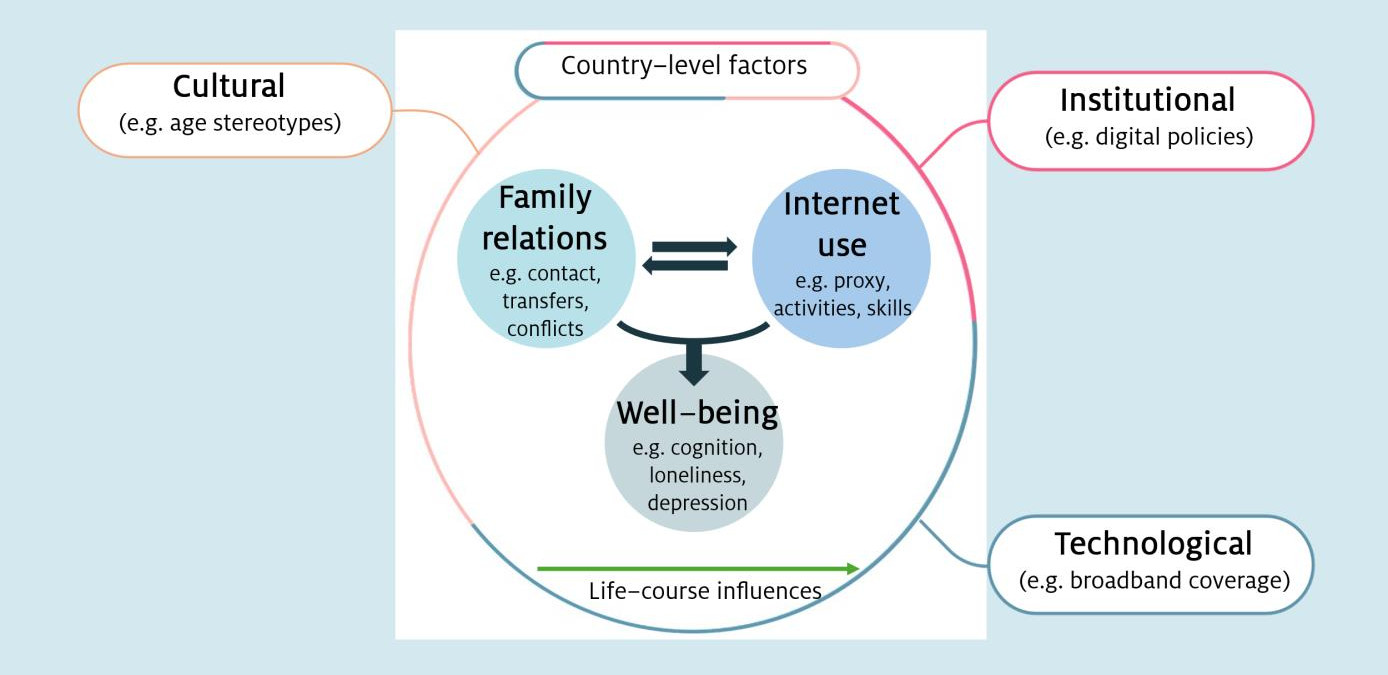
SOCIAL starts from a relational perspective. Social ties can facilitate digital engagement through encouragement, learning and practical help. At the same time, digital technologies can reshape the frequency, quality and meaning of relationships. The consequences for wellbeing depend on how these processes interact and on the wider social, cultural, institutional and technological context.
A multilevel and life-course conceptual model